
How wind damages shingles and flashing
Wind pressure is strongest at roof edges, corners and ridges. It can break shingle seals, crease tabs, loosen exposed metal and force rain into small openings at flashings. The decision should also account for branches or impact marks.

Damage may be subtle
A shingle can remain in place after its seal breaks, then lift during the next storm. Creases, displaced tabs and debris below the roof are useful clues.
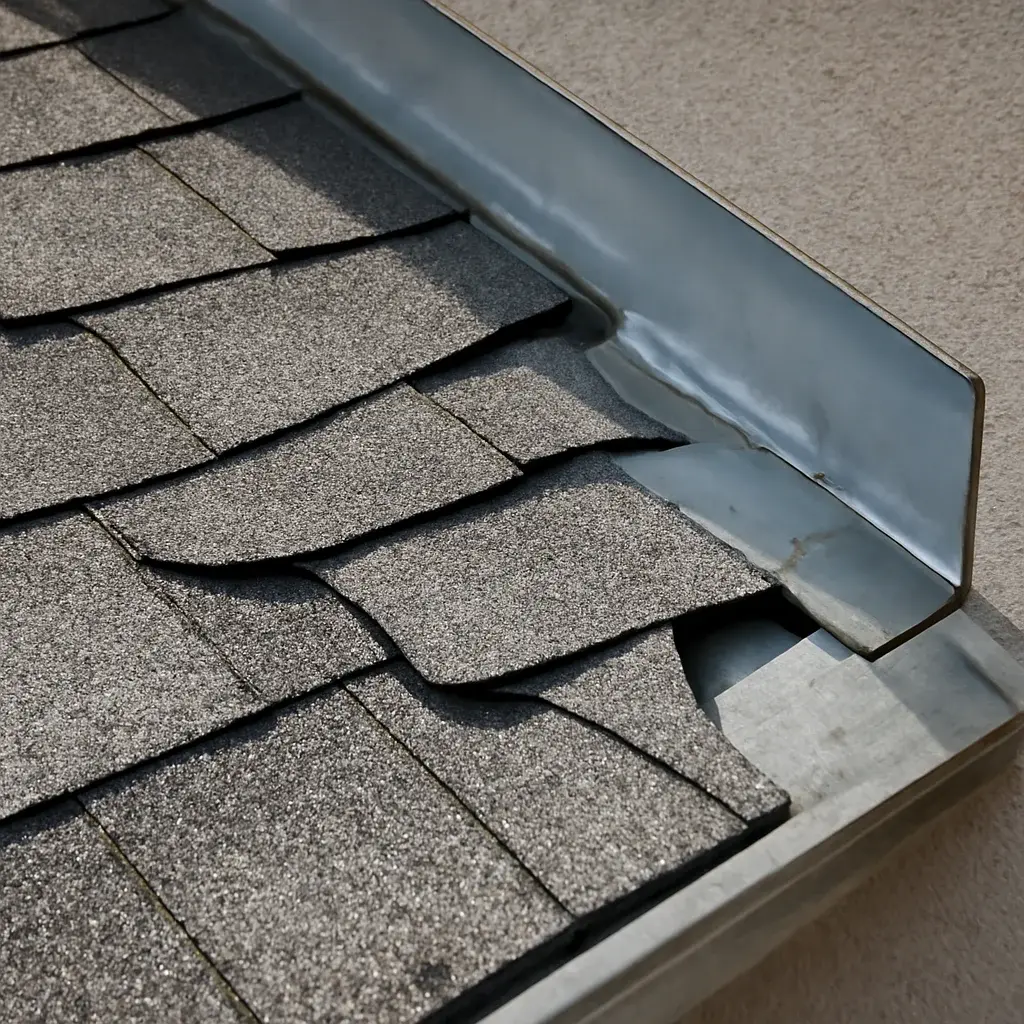
Edges and penetrations need attention
Rake metal, eaves, ridge caps, vents and chimney flashings experience concentrated pressure. Fastener pattern and substrate condition affect resistance.

Inspect safely after the event
Use ground-level photos and interior observations. Do not climb onto a wet roof or approach downed lines; arrange professional access when conditions stabilize.
Details worth checking
- Missing or shifted shingles
- Creased tabs
- Lifted ridge caps
- Loose edge metal
- Displaced vent covers
- New interior stains
- Branches or impact marks
Continue with a related roofing topic
B.C. roofing advice
Roofing advice is most useful when it gives a direct answer, explains the conditions that change it and points to a practical next step.Roofers Langley
Review langley-headquartered roofing and exterior services across British Columbia with practical detail on condition, scope and next steps.Asphalt shingles vs. metal roofing in British Columbia
Asphalt usually has a lower initial cost and broad contractor familiarity; metal often has a higher initial cost with longer potential service.Apply the information to the actual roof
Share the property, roof type, observed condition and decision timeline. A site-specific review can confirm which parts of the guidance fit and where the scope needs to change. Use ground-level photos and interior observations.
Share your project details