Skylight leak repair
The scope focused on tracing the defect, opening the affected detail far enough to reach sound material and rebuilding it with compatible components. The project record centres on the inspection logic, scope choice and workmanship details involved in leaking skylight diagnosis and repair case study.
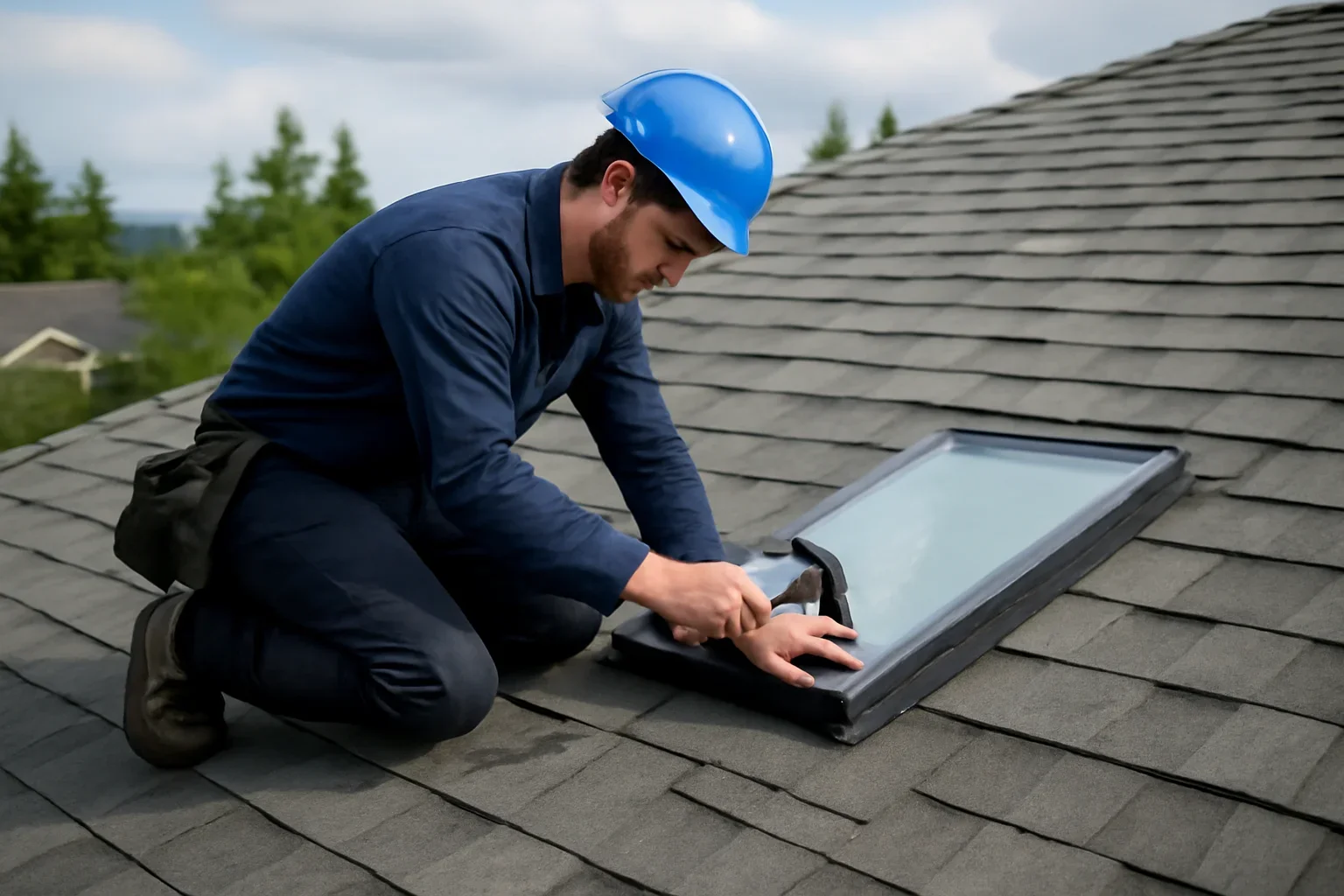
The skylight unit, curb, underlayment and surrounding flashing were assessed as one connected opening. The technical focus was treating the skylight, curb and surrounding roof as one detail.
Project overview
Project type
Skylight leak repair
Primary technical focus
Treating the skylight, curb and surrounding roof as one detail.
Closeout priority
Photos of concealed preparation, completed details and a clear record of the work area.

How the condition was approached
The visible issue was treated as the starting point rather than the complete diagnosis. The surrounding roof, water path, flashings, drainage and substrate risk had to be considered before the final work area was defined. The central technical issue is treating the skylight, curb and surrounding roof as one detail.
A skylight leak may come from glazing seals, flashing, an improperly built curb, condensation or roofing higher on the slope. In a case like this, opening the detail only makes sense when the crew is prepared to replace compromised material and restore every layer in the correct sequence.
Work sequence and quality checkpoints
Identify the moisture source
Compare interior staining with exterior details and weather conditions before removing components. The documentation should connect the starting condition to head, side and sill flashing arrangement.
Repair or replace the right layer
Correct flashing and roofing, rebuild the curb or replace the skylight unit according to the actual failure. Photos should show concealed preparation as well as the finished surface.
Integrate surrounding materials
Restore underlayment and roof covering so water sheds around the opening without relying on exposed caulking. Photos should show concealed preparation as well as the finished surface.
What property owners can take from the project
Replacement often makes sense when the unit is old, glazing seals have failed or the roof is being replaced and the skylight is near the end of its service life. The documentation should connect the starting condition to head, side and sill flashing arrangement.
A project example is useful when it shows why a scope was chosen and which details were inspected. It should not be used as a fixed price or timeline for another roof because access, area, materials and concealed condition can be different. The central technical issue is treating the skylight, curb and surrounding roof as one detail.
Project measurements, product brands, dates, warranties and customer comments are published only after verification against the approved job record. Closeout records should show the condition of curb height, condition and membrane tie-in and the completed detail.
Related projects and service information
Surrey roof-leak diagnosis and flashing repair
Surrey roof-leak diagnosis and flashing repair follows the project decision, work sequence and closeout checks behind matching the scope to the roof's actual condition.Why skylights leak and how Roofers diagnose them
Skylight leaks can come from failed glazing seals, curb or flashing defects, condensation or roofing higher on the slope.Gutter and fascia replacement in Delta, B.C.
Gutter and fascia replacement in Delta, B.C. follows the project decision, work sequence and closeout checks behind matching the scope to the roof's actual condition.Verified reviews and credentials
Questions customers ask
Can this project scope be copied to another roof?
No. Roof system, age, deck condition, access, drainage and surrounding details must be inspected before a second work area is confirmed. The written scope should connect the answer to the property's observed condition. The second roof still needs a separate review of head, side and sill flashing arrangement.
What technical decision shaped the skylight leak repair project?
The scope focused on tracing the defect, opening the affected detail far enough to reach sound material and rebuilding it with compatible components. The skylight unit, curb, underlayment and surrounding flashing were assessed as one connected opening. The record should show how that decision addressed curb height, condition and membrane tie-in.
What makes the project documentation useful?
Useful records show the starting condition, opened assembly, substrate preparation, critical flashings and finished work. Product, date, warranty and customer claims should match the approved job record. Closeout photos should make the condition of glazing, seals and weep paths understandable.
Compare the project logic, not only the finished appearance
Share the condition of your own roof, the building type and the symptom or planned work. An inspection can determine which parts of this project approach are relevant and which are not. Closeout records should show the condition of curb height, condition and membrane tie-in and the completed detail.
Share your project details