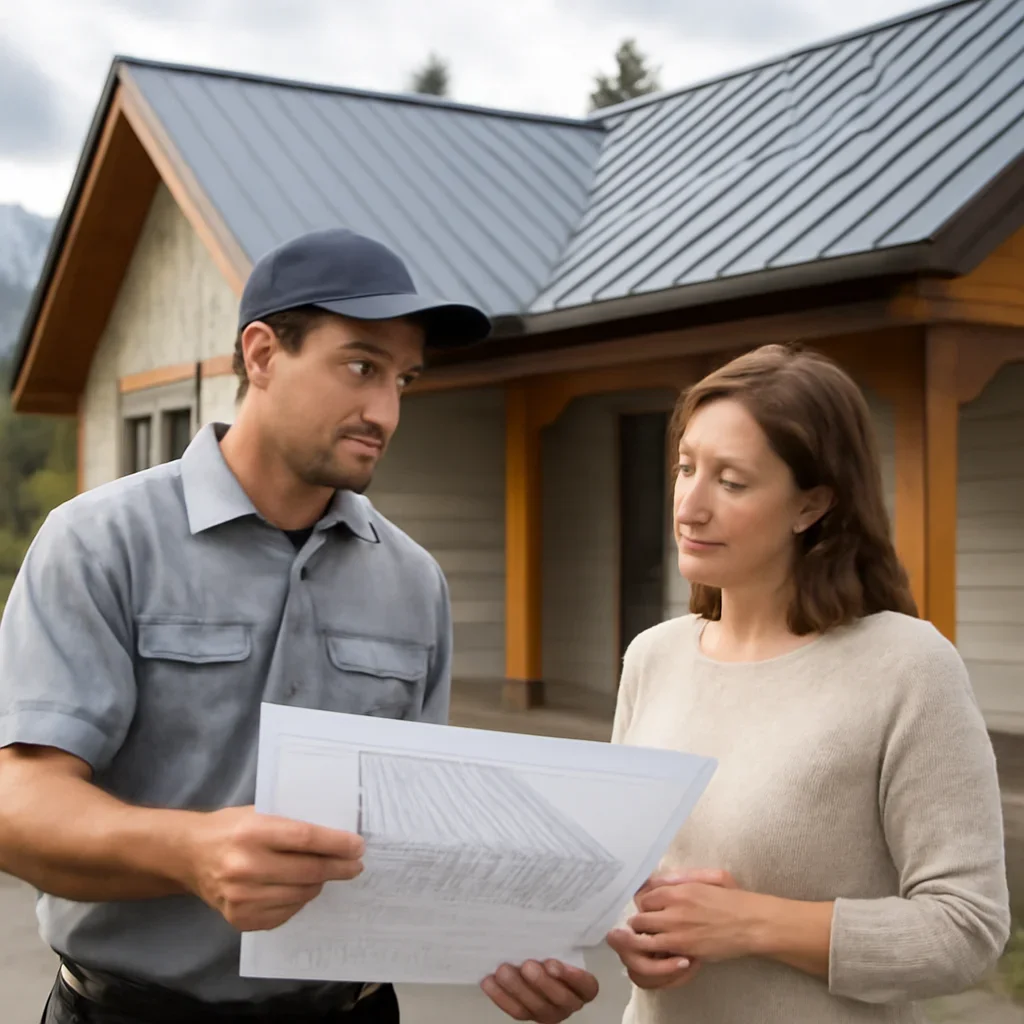
Metal roofing
Metal roofing is durable when the profile, substrate, underlayment and movement details are selected as a system. Our team assesses the roof, explains the practical options and prepares a scope that fits the building, access and timing. The field review also checks exposed or concealed fastener condition.
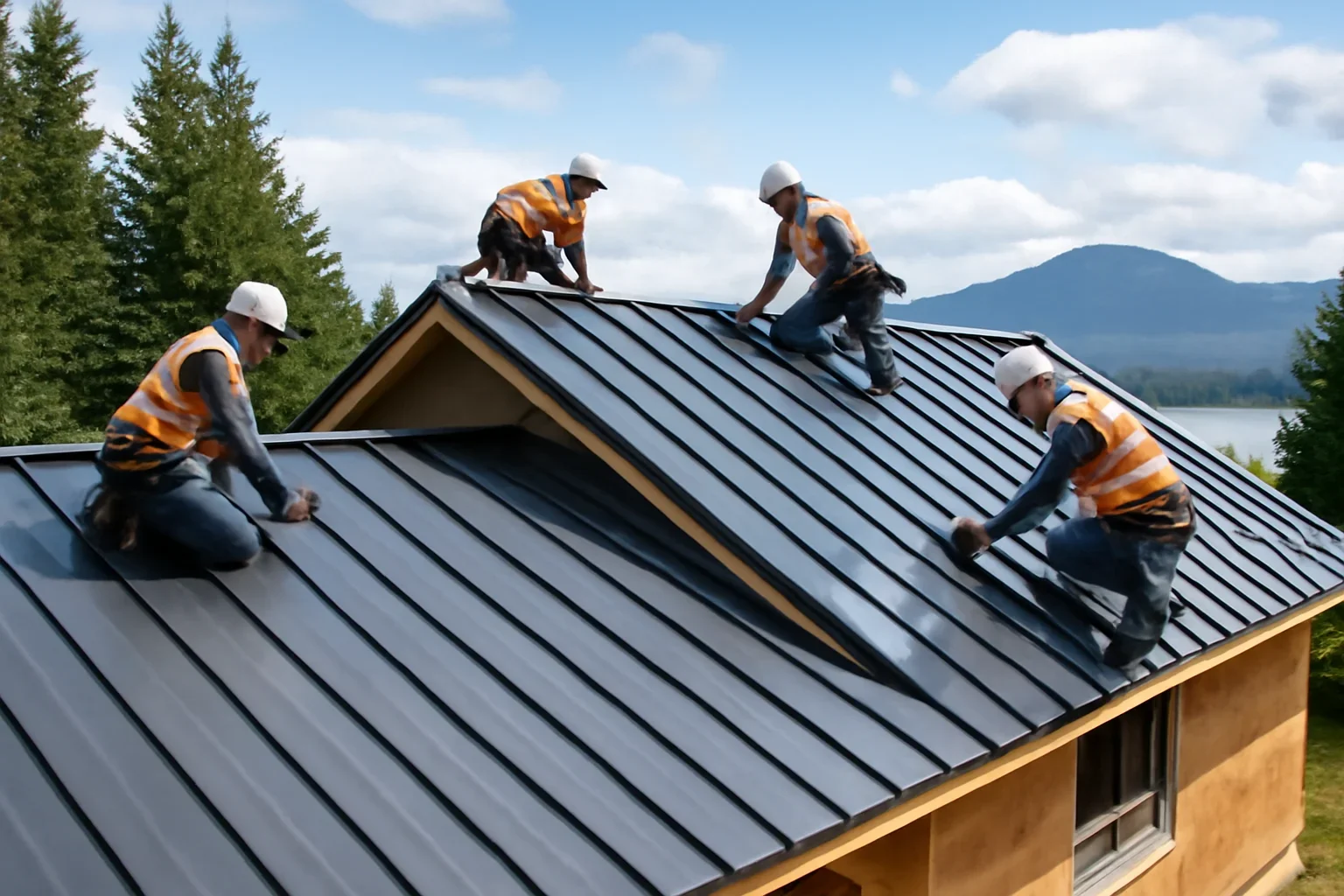
Metal can be worthwhile for long-term ownership, but system type, detailing and access for future maintenance should be compared—not just the panel material. The written scope should connect that decision to the roof's observed condition. The field review also checks exposed or concealed fastener condition.
What a proper assessment looks for
The visible symptom is only the starting point. Materials above, below and beside the affected area need to be reviewed so the estimate reflects the actual water path and the condition of the substrate. The written scope should explain how the condition of panel laps, seams and signs of movement affects the work.
- Exposed or concealed fastener condition.
- Panel laps, seams and signs of movement.
- Cut edges, corrosion and incompatible metals.
- Flashings at ridges, valleys and penetrations.

How the work moves from concern to closeout
Choose the right profile
Consider slope, panel length, appearance, maintenance and whether fasteners will be exposed. The estimate should connect each line item to an observed condition or stated project requirement.
Lay out penetrations and edges
Plan panel modules so chimneys, vents and valleys do not create avoidable small pieces or difficult seams. Photos and measurements should make allowances and exclusions understandable before approval.
Install and verify movement details
Use compatible fasteners, closures and flashings, then inspect alignment and water paths.
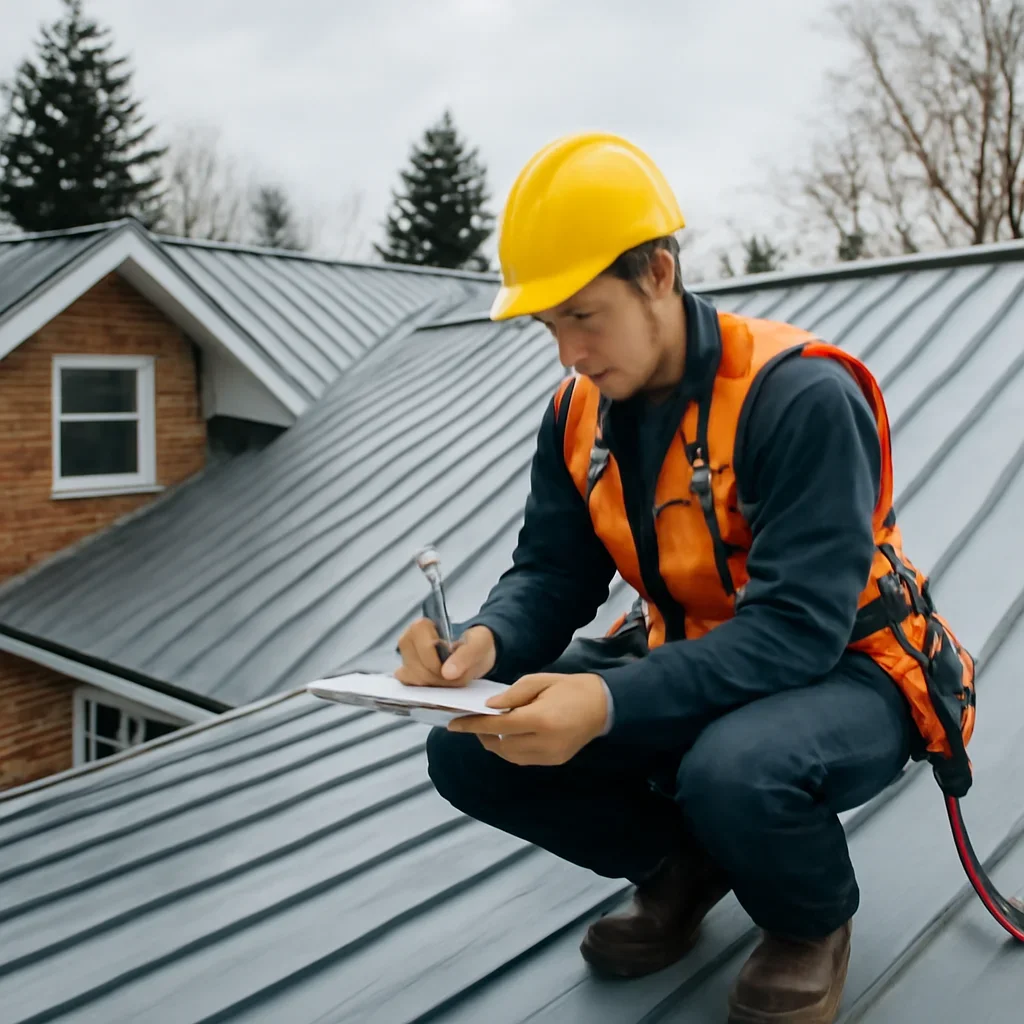
What should be clear before approval
A complete scope identifies the work area, preparation, materials, flashing treatment, cleanup and any exclusions. It should also explain how concealed damage will be documented and priced if it becomes visible after removal. The written scope should explain how the condition of panel laps, seams and signs of movement affects the work.
Property protection and communication belong in the plan as well. Ask where materials will be staged, how landscaping or tenant areas will be protected and who will provide progress updates. The field review also checks exposed or concealed fastener condition.
Why the surrounding roof matters
Metal can be worthwhile for long-term ownership, but system type, detailing and access for future maintenance should be compared—not just the panel material.
The inspection should also account for access, weather exposure, existing warranties and any related gutter, ventilation or wall details. That broader view prevents a narrow fix from moving water to the next weak point. Closeout notes should record the condition of flashings at ridges, valleys and penetrations.

Related roofing information
Roofing services
Roofers Langley provides residential, commercial and roof-system services, with scopes built from the roof condition, building use, access and expected service life.Asphalt shingle roofing
Asphalt shingle roofing focuses on installing a layered steep-slope roof, including shingle condition, granule loss and sealing.Roofing systems
Roofing systems should be compared by slope, deck, weather exposure, building use, installation detail, maintenance and total ownership needs.Verified reviews and credentials
Questions customers ask
How is the scope for metal roofing determined?
Metal roofing is durable when the profile, substrate, underlayment and movement details are selected as a system. The field review checks exposed or concealed fastener condition, panel laps, seams and signs of movement and cut edges, corrosion and incompatible metals. For metal roofing, each line item should connect to exposed or concealed fastener condition.
When is a different or larger roofing scope more practical?
Metal can be worthwhile for long-term ownership, but system type, detailing and access for future maintenance should be compared—not just the panel material. The recommendation should compare expected service life, repeat-failure risk and the cost of each option. For metal roofing, each line item should connect to exposed or concealed fastener condition.
What should be shared before the inspection?
Provide the property address, roof type if known, where the problem appears, when it started and any safe photos. Mention access restrictions, active interior water and deadlines that affect scheduling. Also note any symptom or access issue related to cut edges, corrosion and incompatible metals.
Discuss metal roofing with a clear starting point
Share the property address, roof type, observed issue and preferred timing. The response can focus on managing fastening, expansion and custom flashings and the inspection details needed before a scope is prepared. The written scope should explain how the condition of panel laps, seams and signs of movement affects the work.
Share your project details