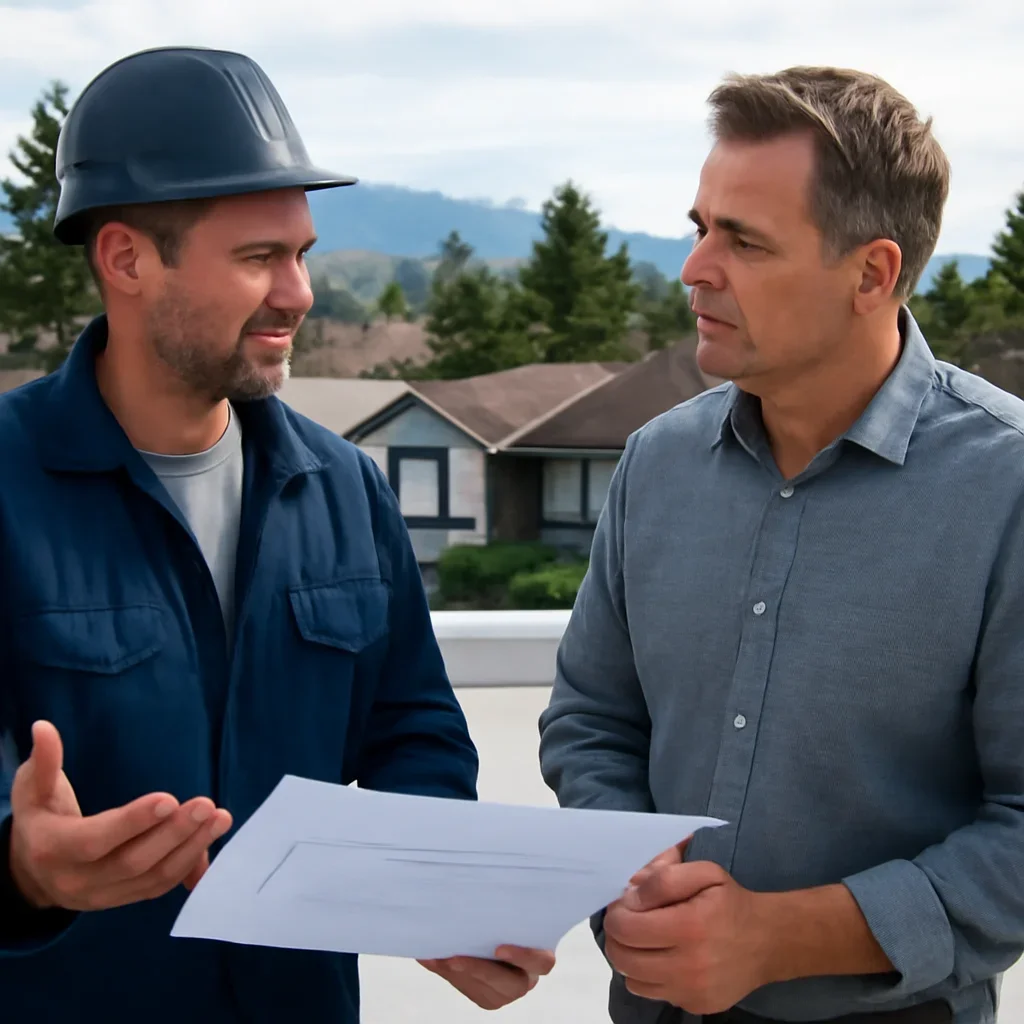
Flat roofing in Vancouver, B.C.
Low-slope roofs rely on continuous membranes, sound seams, positive drainage and durable detailing around every penetration. Our team assesses the roof, explains the practical options and prepares a scope that fits the building, access and timing. Material and sequencing choices should remain compatible with the surrounding roof assembly.
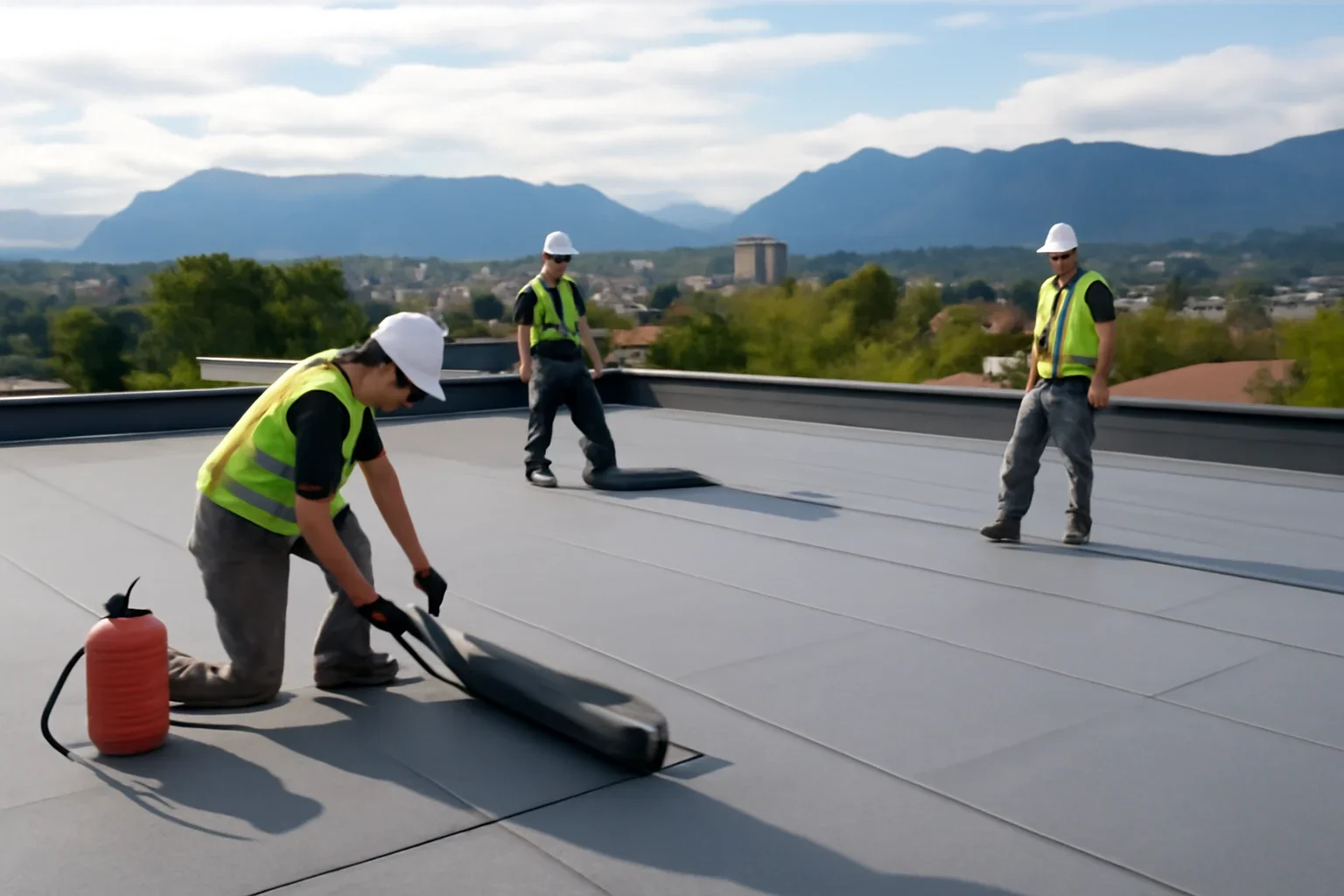
A flat roof can often be repaired when defects are isolated. Broad moisture, failed adhesion or recurring ponding calls for a more comprehensive solution. The written scope should connect that decision to the roof's observed condition. The estimate should connect controlling water on low slopes to the actual roof condition and site constraints.
What a proper assessment looks for
The visible symptom is only the starting point. Materials above, below and beside the affected area need to be reviewed so the estimate reflects the actual water path and the condition of the substrate. The field review also checks standing water and the condition of drains or scuppers.
- Standing water and the condition of drains or scuppers.
- Membrane seams, blisters, splits and punctures.
- Curbs, parapets, walls and edge transitions.
- Insulation moisture and deck condition.
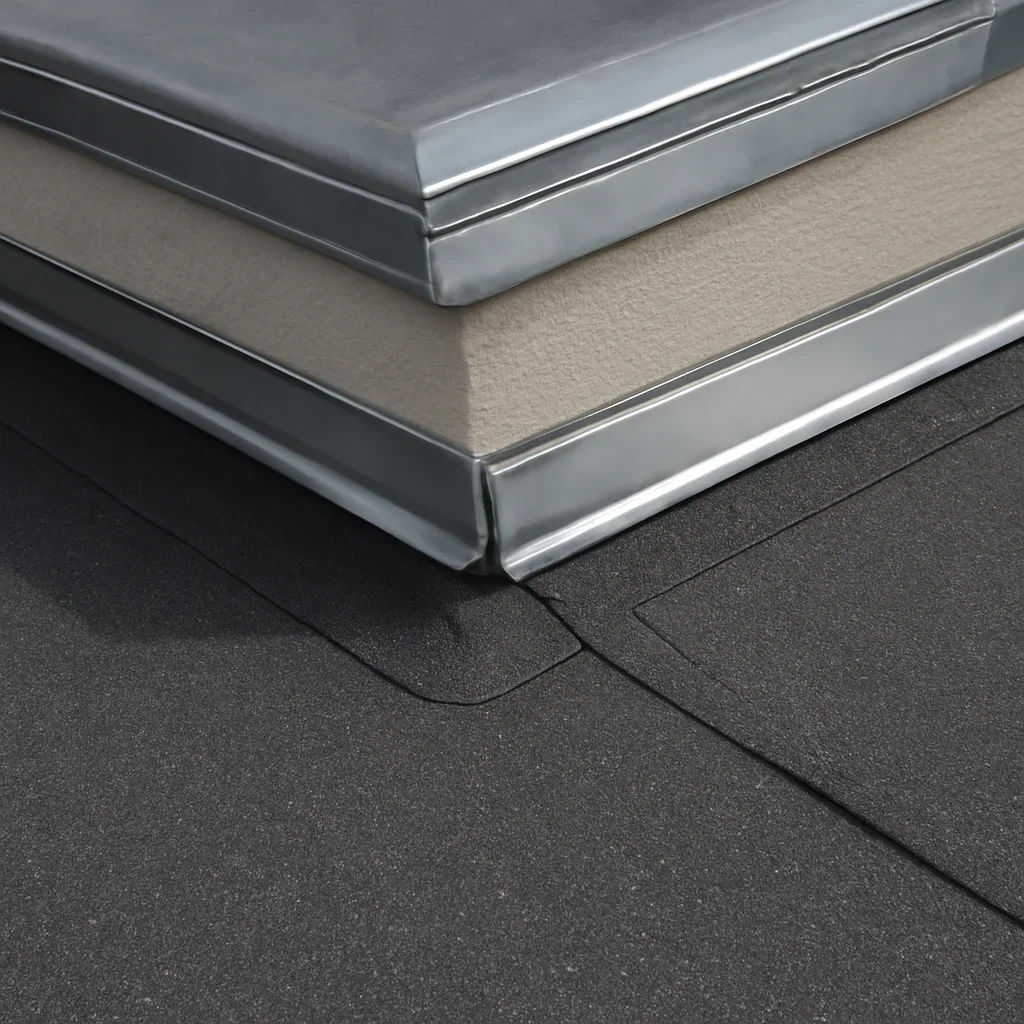
How the work moves from concern to closeout
Confirm assembly and drainage
Identify the membrane, insulation, deck and water paths before selecting a repair or replacement system. Before approval, confirm how the contractor will assess curbs, parapets, walls and edge transitions.
Prepare a compatible substrate
Remove wet or failed components and create the surface required by the chosen membrane.
Complete seams and details
Install field membrane, flashings, drains and edge work, then inspect all welded or bonded connections. The local plan should state how weather delays and temporary protection will be handled.
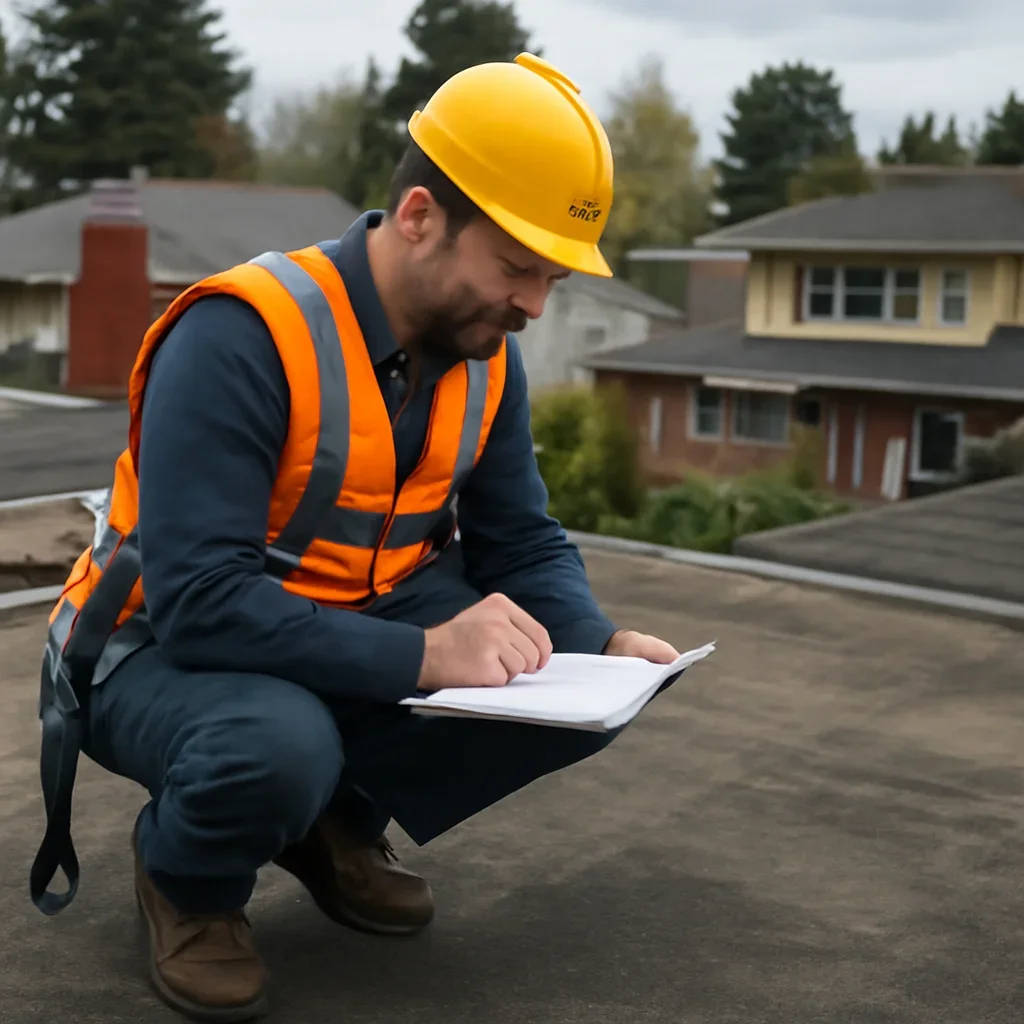
What should be clear before approval
A complete scope identifies the work area, preparation, materials, flashing treatment, cleanup and any exclusions. It should also explain how concealed damage will be documented and priced if it becomes visible after removal. The estimate should connect controlling water on low slopes to the actual roof condition and site constraints.
Property protection and communication belong in the plan as well. Ask where materials will be staged, how landscaping or tenant areas will be protected and who will provide progress updates. The written scope should explain how the condition of membrane seams, blisters, splits and punctures affects the work.
Local conditions that shape the work
Vancouver's marine climate brings long wet periods, wind-driven rain and frequent shade from mature trees. The city includes older houses, renovated homes, low-rise apartments and many flat or low-slope commercial roofs. Closeout notes should record the condition of insulation moisture and deck condition.
Tight access, lane logistics and close neighbouring buildings often shape the installation plan. The estimate should connect controlling water on low slopes to the actual roof condition and site constraints.
Related roofing information
Roof repair in Vancouver, B.C.
Roof repair in Vancouver focuses on finding the failure before choosing the repair, including local access and exposure.Flat-Roof repair in Vancouver, B.C.
Flat-Roof repair in Vancouver, B.C. follows the project decision, work sequence and closeout checks behind finding the failure before choosing the repair.Roofing company in Vancouver, B.C.
See how Vancouver's building mix, weather and site access affect local repair, replacement and maintenance planning.Verified reviews and credentials
Questions customers ask
How is flat roofing scoped for a Vancouver property?
Low-slope roofs rely on continuous membranes, sound seams, positive drainage and durable detailing around every penetration. The field review checks standing water and the condition of drains or scuppers, membrane seams, blisters, splits and punctures and curbs, parapets, walls and edge transitions. For the Vancouver property, each line item should connect to standing water and the condition of drains or scuppers.
When is a broader roofing scope more practical?
A flat roof can often be repaired when defects are isolated. Broad moisture, failed adhesion or recurring ponding calls for a more comprehensive solution. For the Vancouver property, each line item should connect to standing water and the condition of drains or scuppers.
What should be shared before the inspection?
Provide the Vancouver address, roof type if known, observed issue, timing and safe photos. Mention access restrictions, active interior water and any occupied areas that require coordination. Also note any site condition that could affect curbs, parapets, walls and edge transitions.
Discuss flat roofing for a Vancouver property
Share the property address, roof type, observed issue and preferred timing. The response can focus on controlling water on low slopes and the inspection details needed before a scope is prepared. Access, exposure and drainage in Vancouver are considered before the schedule is confirmed.
Share your project details